Health
On this page, you will find information about the impacts of climate change on: health (impacts on physical health; impacts on mental health); and health services (direct impacts on health services; economic impacts of heat).
Climate change affects health
Anyone confronted with climate events can directly or indirectly experience impacts on their physical and mental health. These effects can be more serious if the affected individual suffers from social inequalities in health, lives or works in an unfavourable environment, or already has fragile health.
Impacts on physical health
Climate change can have many effects on physical health. These can be direct or indirect physical impacts, such as diseases that are transmitted by insects to humans or the amplification of social inequalities in health.
Climate change can lead to personal injury resulting from a chain of impacts.
For example, rising temperatures (a direct impact of climate change) can contribute to summer droughts (a direct consequence of the impact). These can make forests more vulnerable to fire.
When wildfires occur near communities, the impacts on both the health of the population and the integrity of infrastructure are numerous. That happened in Jasper, Alberta in 2024, when a third of the city’s infrastructure was devastated by fire. In an event of this kind, damage to buildings, infrastructure and trees can cause objects and debris to fall, causing potential physical injuries.
The smoke from forest fires can also spread over great distances and affect people’s health very far from the fire’s place of origin. This occurred in the summer of 2023, when smoke from the fires raging in Quebec caused problems as far away as the northeastern United States. Smoke from the Canadian prairie wildfires in the summer of 2025 spread even farther, all the way to Europe.
Other hazards that are expected to worsen with climate change can also deteriorate the living environment and cause a great deal of destruction. Floods, landslides and strong winds can be indirectly responsible for bodily injury.
Bodily injury can also occur when an individual is directly injured by the climate event. For example, during freeze-thaw or freezing rain events, roads can be covered with ice, causing falls and injuries.
A climate event can also affect an individual’s internal system. The body can activate physiological mechanisms to protect itself, creating a cascade effect of unwanted symptoms. For example, heat waves can cause heatstroke, dizziness, dehydration, physical fatigue upon exertion, and even increased heart rate, possibly leading to cardiac arrest.
In Canada and around the world, scientific research unanimously recognizes extreme heat as the hazard with the greatest impact on human health. The majority of these effects result from complex mechanisms that can affect almost every organ and system in the human body.
A recent example of an extreme heat event in Canada occurred in June 2021, when British Columbia experienced an unprecedented heat wave. The temperature in the village of Lytton reached 49.6°C: the hottest on record in Canada. 619 people died, making it the deadliest weather event in the country.
The working environment can also play a role in amplifying the effects of heat. This is particularly true if the surrounding hard surfaces (made of asphalt, concrete and tar) are numerous and dark in colour, as they absorb heat during the day and radiate it at night. Outdoor workers are highly exposed to heatstroke, and even more so when their activities take place near this type of surface.
Indoor workers in difficult environments like kitchens and laundry rooms are also exposed to the risk of heatstroke. Workplace accidents increase during periods of extreme heat, especially among young workers. The Institut de recherche Robert-Sauvé en santé et en sécurité du travail has developed a variety of resources to help prevent heatstroke in the workplace, including a web-based app.
Webinar | Extreme Heat in Quebec : Current and Future Health and Economic Burden
Webinar | Analyse des actions municipales prises pour lutter contre les effets des vagues de chaleur sur les personnes vulnérables
Research project | Climate Change and Heat Vulnerabilities of Canadian Workers
This project focuses on the relationship between summer temperature and the health of workers in five Canadian provinces. It has generated new knowledge that can guide decision-makers and organizations involved in prevention.
Research project | Interactive Atlas of the Vulnerability of the Quebec Population to Climate Hazards for Local and Regional Stakeholders
Managers, professionals and planners in Quebec municipalities have a new tool for assessing and mapping the vulnerabilities of the Quebec population to heat waves and hydrometeorological hazards.
Certain climate-related events can also exacerbate chronic respiratory diseases like asthma. The warming of average temperatures causes rising concentrations of fine particles and ozone in the air, as well as forest fires, which produce smoke.
The warmer temperatures are also causing spring to arrive earlier in Quebec, and fall to start later. Allergenic plants like ragweed have the opportunity to grow for longer, which increases pollen production and lengthens the allergy season.
Summer storms, especially rainfall events combined with strong winds, trigger the production and release of allergens into the air. This facilitates the detachment and dispersion of pollen and increases allergic symptoms (nasal secretions and eye irritation).
Research project | Development, Implementation and Evaluation of an Intervention to Control Ragweed Pollen
This project increased awareness of the health risks associated with ragweed. It also demonstrated the effectiveness of taking action (such as sending information to the owners of infested property) to limit impacts during the pollen season.
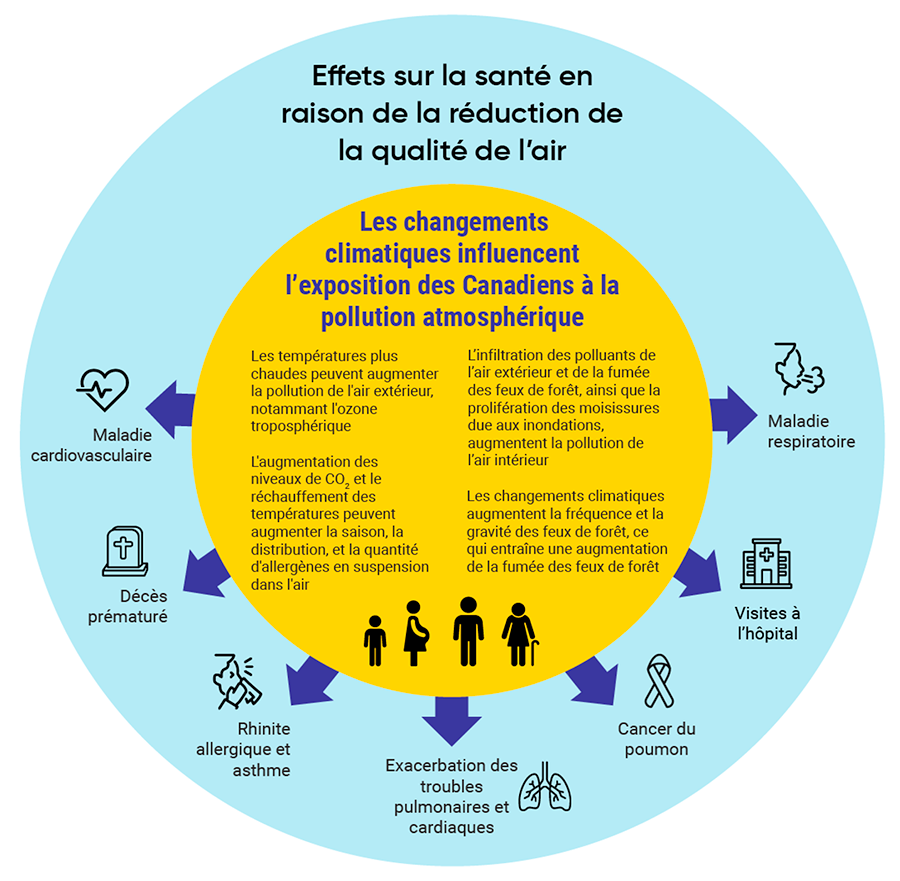
Figure 1: Health effects due to reduced air quality.(source : Berry, P., et Schnitter, R. (éd.). (2022). La santé des Canadiens et des Canadiennes dans un climat en changement : faire progresser nos connaissances pour agir. Ottawa (Ontario) : government of Canada.
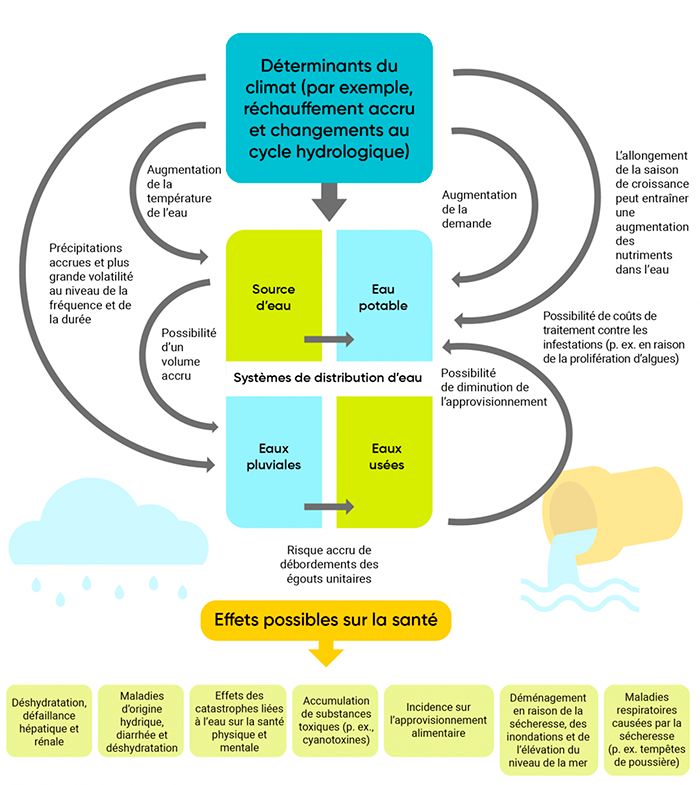
Figure 2 : Impacts of climate change on water quality and quantity, and repercussions on health.(Source: Berry, P., et Schnitter, R. (éd.). (2022). La santé des Canadiens et des Canadiennes dans un climat en changement : faire progresser nos connaissances pour agir. Ottawa (Ontario) : government of Canada.
Climate change is also responsible for the degradation of water quality, which in some contexts can affect the physical health of individuals.
The presence of certain bacteria in water, such as Campylobacter and Escherichia coli, is favoured by warmer temperatures and low water flow. They make swimming and other water activities dangerous. They can cause diarrhea or dehydration, and even pose a life-threatening risk in the most serious cases.
Research project | Modelling Future Coastal Water Temperature Scenarios and Implications for Potential Infections by Vibrio parahaemolyticus and Vibrio vulnificus
This project demonstrates that the farming of shellfish (mussels, oysters, etc.) in the Gulf of St. Lawrence is sensitive to warming water temperatures, potentially increasing the risk of human contamination with Vibrio bacteria.
Zoonoses: Diseases transmitted to humans by insects
Quebec’s warmer summers and winters are increasingly favourable to the spread of pest species that are migrating north. Among them, several are likely to carry diseases.
Zoonoses are diseases or infections caused by viruses, bacteria or parasites that are naturally transmitted between animals and humans. Some of these diseases are well known in Quebec, but certain details are worth pointing out.
One example is the West Nile virus, transmitted by mosquitoes, which, contrary to popular belief, is more likely to spread in large cities than in the wilderness due to the concentration of humans.
The prevention and control of these zoonotic diseases includes monitoring, risk management and the identification of the most promising public health interventions.
To this end, maps are now available to view endemic areas or the distribution of certain species in connection with climate change. This is particularly the case for Lyme disease and its main vector, the blacklegged (deer) tick.
The INSPQ, in collaboration with Ouranos, has produced new maps showing that most of Quebec’s inhabited land may offer favourable conditions for ticks by 2080. This prospect means an increased risk of being bitten and contracting the disease.
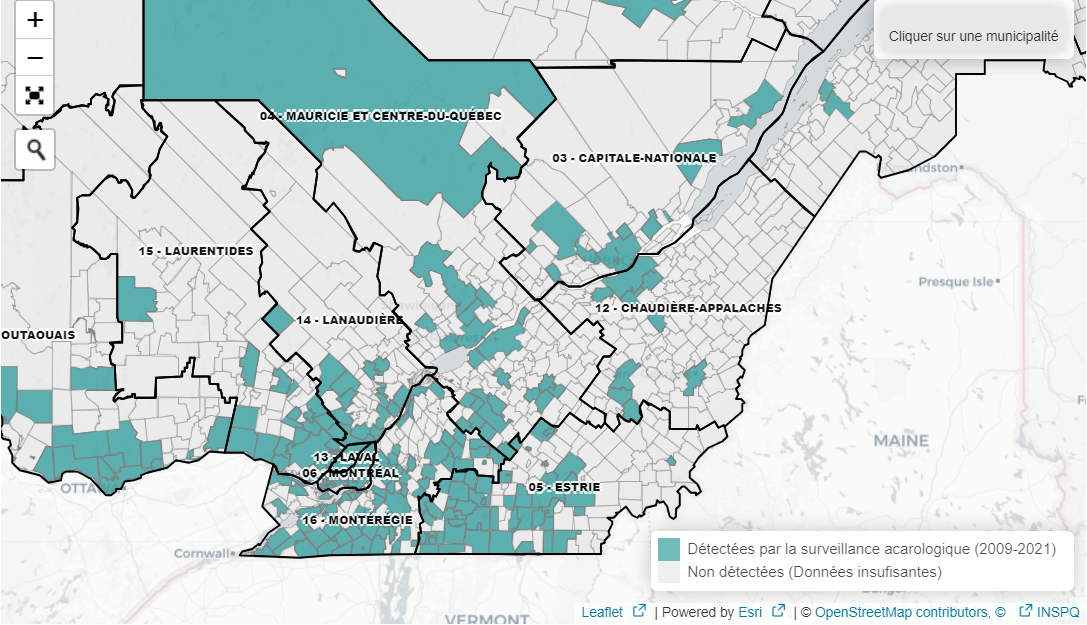
Figure 1: Current distribution map of Ixodes scapularis tick populations in Quebec. https://www.inspq.qc.ca/zoonoses/cartes/tiques
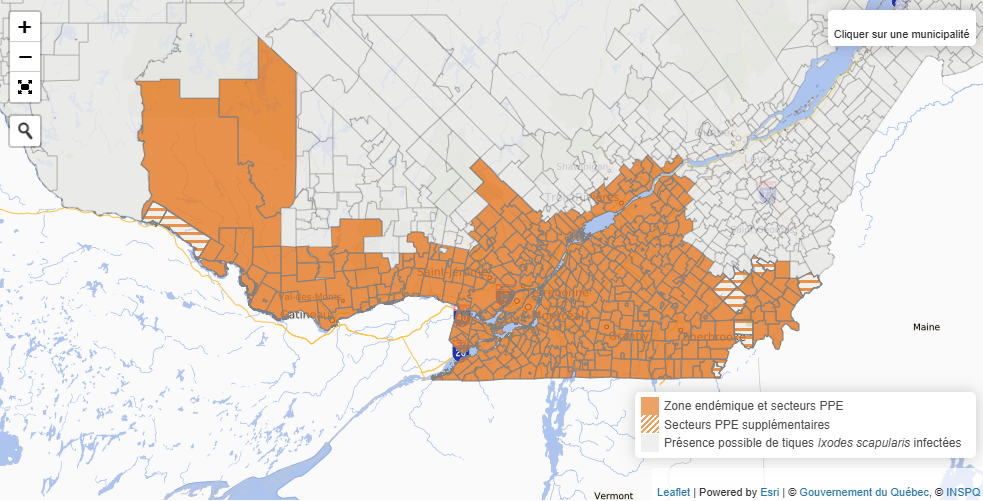
Figure 2: Tool for classifying reported cases of Lyme disease and identifying areas targeted by the PPE. https://www.inspq.qc.ca/zoonoses/maladie-de-lyme
Zoonoses and emerging diseases
You can learn more about zoonotic and emerging diseases on the INSPQ’s web page on the topic.
Research project | The PARCS en Santé Program: Mitigating Impacts of Climate Change on Human and Ecosystem Health in Peri-Urban Nature Parks Through Citizen Science
The aim of this project is to analyze how citizen science can promote climate change adaptation, by considering the public’s perceptions and behaviours toward ecosystem conservation and the risks of tick-borne diseases, and by acting on them.
Impacts on mental health
In addition to the effects on physical health, climate-related hazards can damage mental health.
The impacts may be related to the increased emotional load during an event or to post-traumatic shock. They can aggravate existing mental disorders or generate new ones, and they can disrupt psychosocial well-being and resilience.
All of these factors are likely to lead to higher rates of hospitalization and an increase in suicidal ideation and harmful behaviours such as substance abuse.
While anyone can be affected by mental health issues, certain populations are more at risk. These include people suffering from anxiety, those experiencing homelessness, and those who have already lived through extreme weather events in the past.
Some populations are more often exposed to such events, such as Indigenous communities living near forested areas that are prone to forest fires.
These communities, which regularly experience evacuations due to their geographic locations, have reported high stress due to the loss of their social structure and their relocation.
When an environment is altered or destroyed, it can create a feeling of psychological distress which results in a decrease in the sense of belonging to a place or the comfort it brings.
Large-scale events such as forest fires and floods obviously have consequences for the victims, but also for the front-line workers involved. Members of the police and fire departments, health and social services personnel, and blue-collar workers (e.g. roads and public works) are all involved in different phases of the event to help the population.
As such, they are also exposed to high levels of physical and psychological stress, which can lead to mental health problems like post-traumatic stress disorder.
In 2020, two authors from the scientific community created a climate change anxiety scale (accessible only to members of the university community).
This innovative peer-reviewed method identifies significant levels of anxiety and can be used to track changes in the population’s reaction in this context. This supports advocacy for better mental health support and services during and after climate disasters. Following an extreme event, certain situations can be difficult or may provoke anxiety in the individuals affected. These include the loss of loved ones, the repair of damage, and the reconstruction of personal property or a home.
The psychological consequences of a climate event can persist for months or even years, affecting individuals and entire families. In Quebec, six months after the major floods in 2019, people affected by the floods showed anticipatory anxiety about potential future climate events and displayed hypervigilance behaviours as a result.
The continuous, frequent, violent and increasingly visible impacts of climate change are generating ecoanxiety. Although people’s fear about the fate of the planet sometimes has negative repercussions, it can also be perceived as an awareness of environmental issues and can become a driver for collective action. In this context, ecoanxiety is not a disease to be cured, but an understandable reaction to the climate crisis.
Health inequity factors can compromise people’s ability to make the right choices when it comes to treating themselves or protecting themselves from extreme weather events. For example, people with low incomes do not have the financial capacity to adapt their homes to hot weather if they are poorly insulated and ventilated.
During a heat wave, the heat accumulated inside a home can lead to deterioration in an individual’s physical condition, potentially resulting in hospitalization.
The phenomenon of eco-gentrification is another example of inequity: often, the greenest neighbourhoods are also the most expensive. While greening is one of the beneficial measures of climate change adaptation, if not well planned, it can sometimes widen the gap between low-income people and the wealthiest.
For more information, see the INSPQ web page on the topic (French only).
Psychological Health Protection for Workers Mobilized during a Flood: A Tool for Workers and Workplaces
For more information, see the INSPQ’s web page on the topic (French only).
Research project | Indoor Temperature of Housing in Montérégie: A Better Understanding for Better Interventions
This project documents the link between the temperature measured inside the home and various health effects in a population that is vulnerable to heat.
Climate change affects healthcare services
Direct impacts on healthcare services
During an extreme event, the emergency situation and the ensuing sharp increase in demand can increase the pressure on healthcare services. This crisis management concerns hospital staff, emergency and hospitalization rooms, and ambulances.
From an infrastructure perspective, many healthcare facilities have not been built to withstand climate events such as strong winds, excessive indoor temperature and flooding.
Their critical systems (medical equipment in operating theatres and intensive care units, etc.) or the buildings themselves (roofing, cladding, windows, piping, electrical systems) could be damaged or rendered non-functional, which would disrupt the provision of care.
From an individual point of view, healthcare staff can also be affected by a climate event and miss work if transportation infrastructure is affected, for example.
In 2023, the WHO published the Operational Framework for Building Climate Resilient and Low Carbon Health Systems. It proposes guidelines and indicators to anticipate and prevent public health risks related to climate change in a systemic way. It also helps to better prepare for and cope with it, and to reduce the burden of its impacts.
By applying the ten main elements of this framework, healthcare system decision-makers will contribute significantly to universal health coverage and the achievement of specific targets of the Sustainable Development Goals.
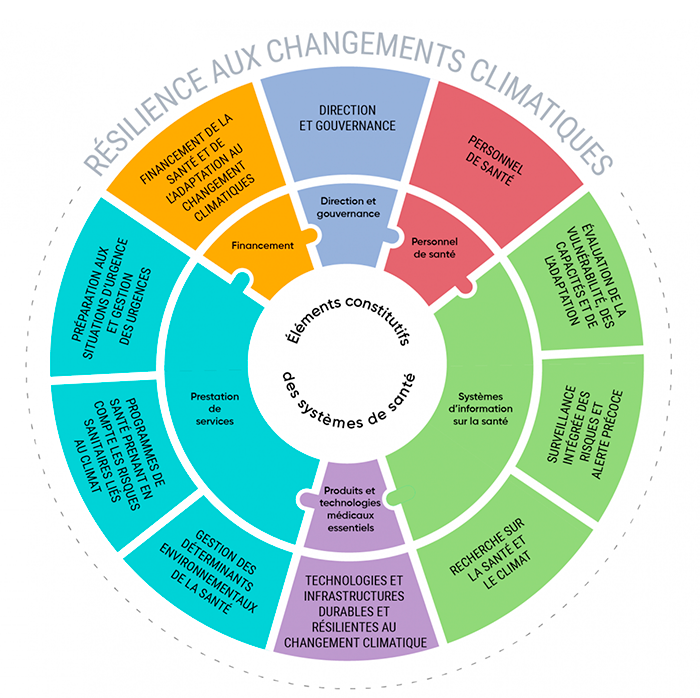
Figure 3 : Ten elements of the WHO’s operational framework for building climate resilient health systems. (Source: Berry, P., et Schnitter, R. (éd.). (2022). La santé des Canadiens et des Canadiennes dans un climat en changement : faire progresser nos connaissances pour agir. Ottawa (Ontario) : government of Canada.)
The economic impacts of heat
Extreme heat has significant economic impacts. In Quebec, the total healthcare costs related to heat were estimated at $1.5 billion per year between 1990 and 2019. However, with climate change and demographic changes, these costs could rise significantly.
Between 2040 and 2070, projections indicate that they could average $7.3 billion per year under a moderate emissions scenario (SSP 2, 4.5) and up to $12.6 billion under a high emission scenario (SSP 5, 8.5).


Last update of the page: December 2025.