
Special dossier : Tourism Industry
Some figures
$18.1 billion in tourism revenue
65.5 million annual visitors
Nearly 24,000 businesses in the industry
Nearly 418,000 jobs created
Data for 2024
The tourism industry is a key economic driver for communities and regions across Quebec.
The tourism supply is closely tied to specific regions and seasons, and it is particularly vulnerable to the accelerating pace of climate change, which is characterized by an increase in the frequency and intensity of extreme weather events as well as the gradual alteration of ecosystems.
Reducing emissions and limiting impacts
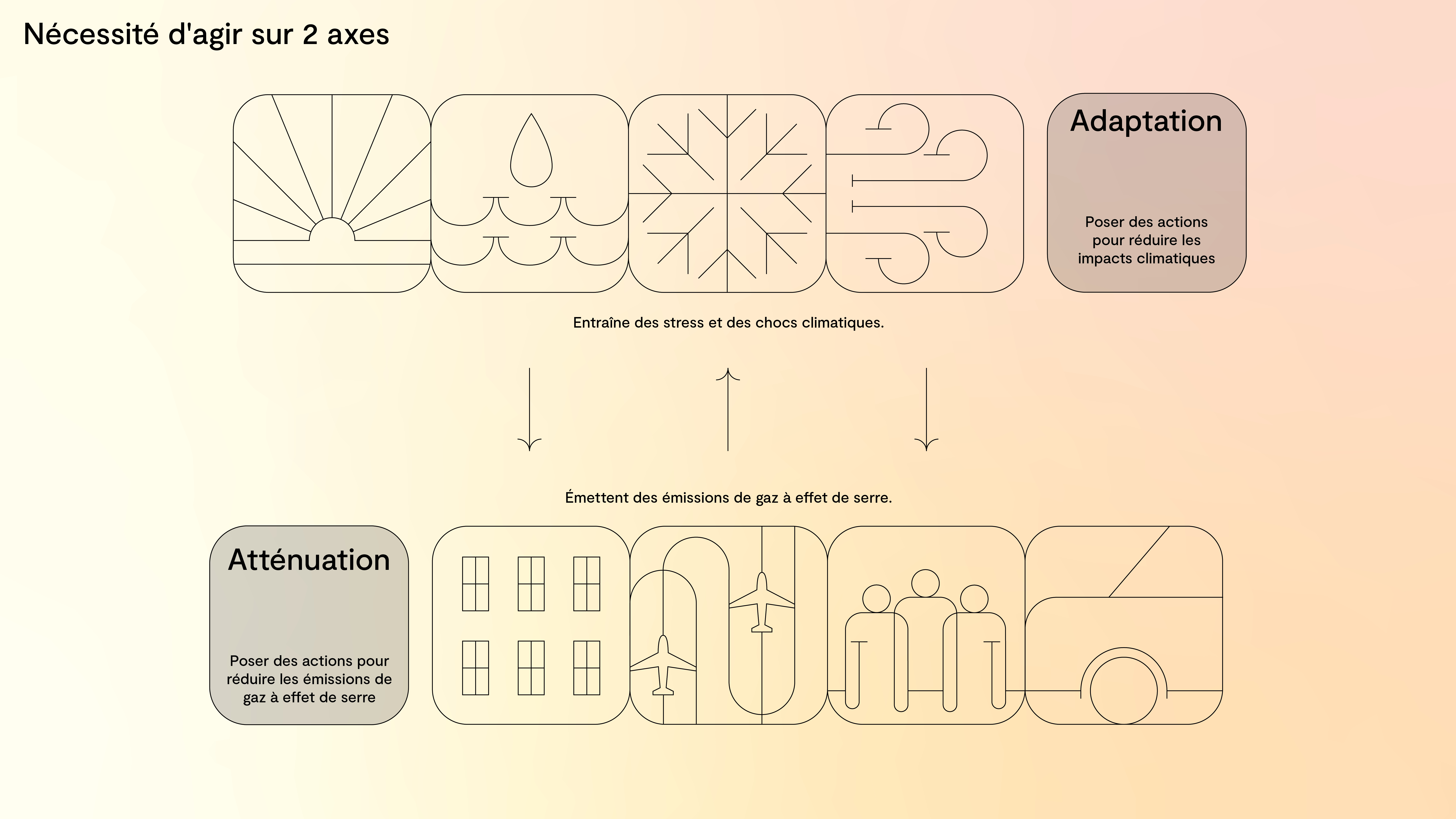
The industry is already demonstrating genuine willingness to adapt to climate change. Given the accelerating pace of the problem, it’s essential to focus efforts on two complementary areas: reducing greenhouse gas emissions from the tourism industry (mitigation) and reducing the impacts of climate change on the tourism industry (adaptation).
A two-pronged approach to resilience
This simultaneous, complementary approach will boost the resilience of the tourism industry in the face of climate change. Incorporating the three pillars of sustainable development—the environment, society, and the economy—also helps promote responsible, sustainable tourism.
The strength of a resilient network
The tourism industry relies on a network of committed stakeholders whose complementary roles support climate change adaptation.
Regional and sector-specific tourism associations play a strategic role that is central to their network of stakeholders. They are recognized by the tourism ministry as key partners in the development of the tourism industry at the regional and sectoral levels.
Thanks to their expertise and their role in fostering collaboration, they help create synergies among local businesses and ensure that ministerial policies are implemented throughout the region.
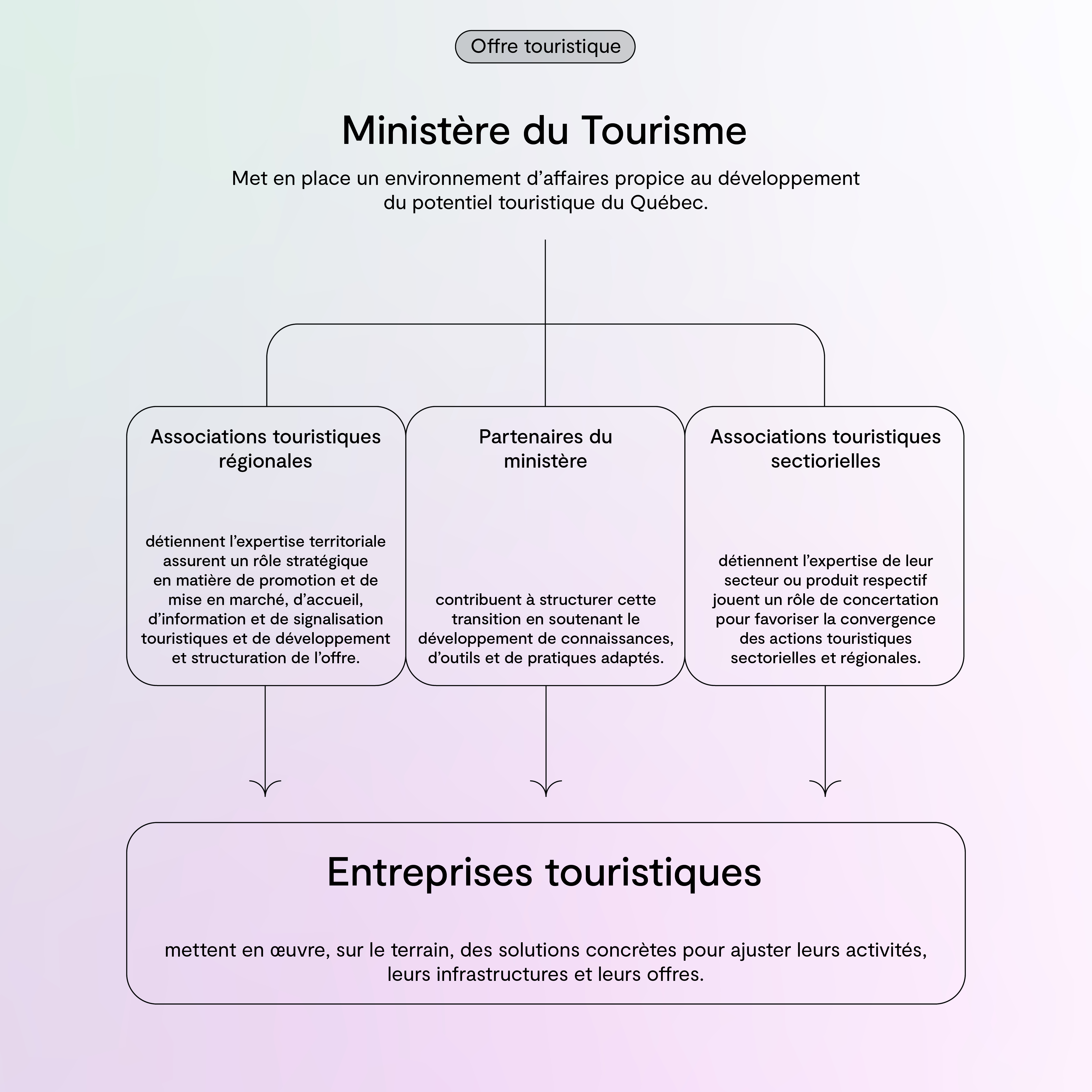
Regional tourism associations are primarily responsible for promotion and marketing, visitor services, tourist information and signage, as well as the development and organization of tourism offerings.
Sector-specific tourism associations spearhead the development of their sector or product, providing leadership and facilitating coordination to ensure that sectoral and regional initiatives align with the ministry’s policy directions.
Other partner organizations also contribute to the tourism ecosystem, complementing regional and sector-specific tourism associations.
Tourism associations can help the tourism industry adapt to climate change by building on their existing mandates.
They are able to support the gradual integration of climate-related issues into tourism practices, projects, and initiatives through their work in developing and structuring tourism offerings, fostering collaboration, supporting organizations, and sharing knowledge.
Watch the training session on the impacts of and adaptation to climate change produced by the Quebec Tourism Industry Alliance as part of the Sustainable Development Pathway in Tourism, made possible through the collaboration and funding of the Ministry of Tourism (2023).
In French only.
Knowledge, tools, and resources were developed in collaboration with tourism industry stakeholders under a mandate given to Ouranos by Quebec’s tourism ministry to support climate change adaptation in the tourism industry.
