
Agriculture
The agri-food industry is an important economic sector that is present in every region of Quebec. In 2023, its contribution to Quebec’s GDP amounted to $29.7 billion. It comprised more than 530,000 jobs, representing 12% of total employment in Quebec. These included:
44% in commercial restaurants
31% in food retailers and wholesalers
14% in food processing
10% in agricultural production
1% in the fisheries sector
The sectors of the agri-food industry
The agri-food industry includes the following sectors: agriculture, commercial fisheries, aquaculture, food and beverage processing, tobacco processing, food wholesale and retail sales, and food services in hotels, restaurants and institutions.
Climate change and the food supply chain
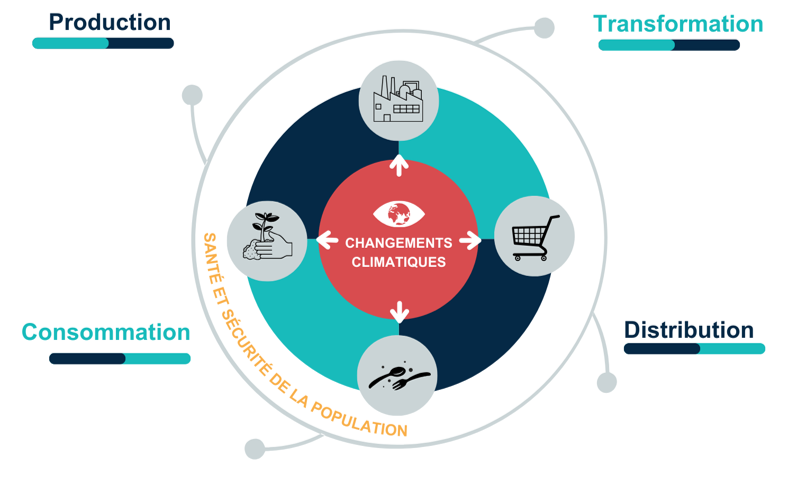
Figure 1: The four links in the food supply chain.
The food system has four links: production, processing, distribution and consumption. All parts of the food supply chain are exposed to the impacts of climate change. These effects can manifest themselves directly, indirectly, or in a cascading manner, affecting each of its links.
For example, a drop in crop yields due to extreme weather events can lead to a rise in prices. This price rise can then spread to processing, distribution and, ultimately, consumption. Thus, the repercussions of climate change can be felt from the farm to the table and ultimately have consequences on the population’s food security, particularly for the most vulnerable groups.
This page will focus primarily on the agricultural production link. It is particularly sensitive to climate change and has been well researched in recent years.
Agricultural production
In Quebec, agricultural production is mainly geared towards livestock farming, particularly dairy production. Field corn is the top plant product.
The province has highly diverse agricultural production, varying according to the regions. The regions of Montérégie, Chaudière-Appalaches and Centre-du-Québec have the largest number of agricultural operations. Some regions are known for more specific products, such as the southern Laurentians for apple growing and Saguenay–Lac-Saint-Jean for berries.
Knowledge on the impacts of climate change and adaptation solutions for food processing and distribution remains limited in Quebec.
The aim of Ouranos’ food systems priority is to develop it.

Last update of the page: January 2026.
