
Energy
Adaptation measures to make the electricity sector more resilient to climate change can take different forms, due to the diversity of the infrastructure and of the regions served.
Adaptation of electrical infrastructure
Increased rainfall and high water levels may require dam adaptation and possibly the resizing of retaining structures to handle larger quantities of water. This increase can offer opportunities for additional energy generation, provided that the necessary infrastructure is available, for example the capacity of the generation equipment.
To adapt to climate change, electrical transmission infrastructure must be designed to handle a wide variety of hazards. How? Here are some examples:
Wire monitoring and de-icing systems help reduce the risks posed by freezing rain
Inserting tension towers at regular intervals of every 10 towers along transmission lines helps to prevent a domino effect in the event of a collapse
Designing power lines that are more resistant to high temperatures maintains their transmission capacity during periods of high heat
Integrating climate data into the grid planning and infrastructure design processes is essential to ensure the resilience of Quebec’s electricity sector. This data makes it possible to anticipate the impacts of climate change on energy generation, transmission and demand.
It’s especially important to integrate climate data into the design of infrastructure that has a very long lifespan, such as dams and transmission lines, so that they are adapted to long-term climate changes.
Research project | Climate-Informed Flood Design for Dam Construction and Maintenance
This project provides a blueprint for Canadian dam managers to include climate change information into flood design values, and proposes solutions to address major sources of uncertainties. It offers a decision-making framework to assess and select adaptation options, mindful of dam managers’ operational context.
Research Project | Post-2100 Climate Scenarios – Case Studies in the Mining Sector
This project aims to produce and disseminate climate scenarios for assessing the impacts of greenhouse gases beyond 2100. Although the project aims for application in the mining sector, the results of the projections could also be useful to other sectors, such as hydroelectricity and coastal zone management.
Webinar | Assessing Climate Change Resilience for Electrical Infrastructure
Webinar | Building Ontario Power Generation’s Resilience Toolkit
Better vegetation management means more resilience
Effective vegetation management can also be a climate change adaptation measure for the electricity sector in Quebec. By doing strategic maintenance work on vegetation near electrical infrastructure, grid managers can prevent service interruptions, improve grid resilience, and protect public safety.
In response to the exceptional fires of 2023, Hydro-Québec strengthened its preparedness to better protect its facilities and the public from forest fires.
Inspired by the FireSmart program, the Hydro-Québec prevention program aims to increase security for critical infrastructure in peri-urban and northern areas. It is coordinated by the emergency measures unit with the support of several departments and includes:
- Guidelines on deforestation around electrical installations
- Standards to be followed for buildings and ventilation systems
- Emergency procedures
- Preventive actions
Learn more (french only)
Reducing demand to strengthen energy resilience
Quebec’s energy resilience can also be improved through a reduction in electricity demand. Measures that reduce air conditioning needs, such as reducing urban heat islands, constructing energy-efficient buildings and, more broadly, implementing energy efficiency measures, lead to a decrease in demand during peak periods.
Small-scale energy production, the creation of smart grids and the diversification of energy sources are also ways to reduce dependence on the electrical grid in the event of disruptions.
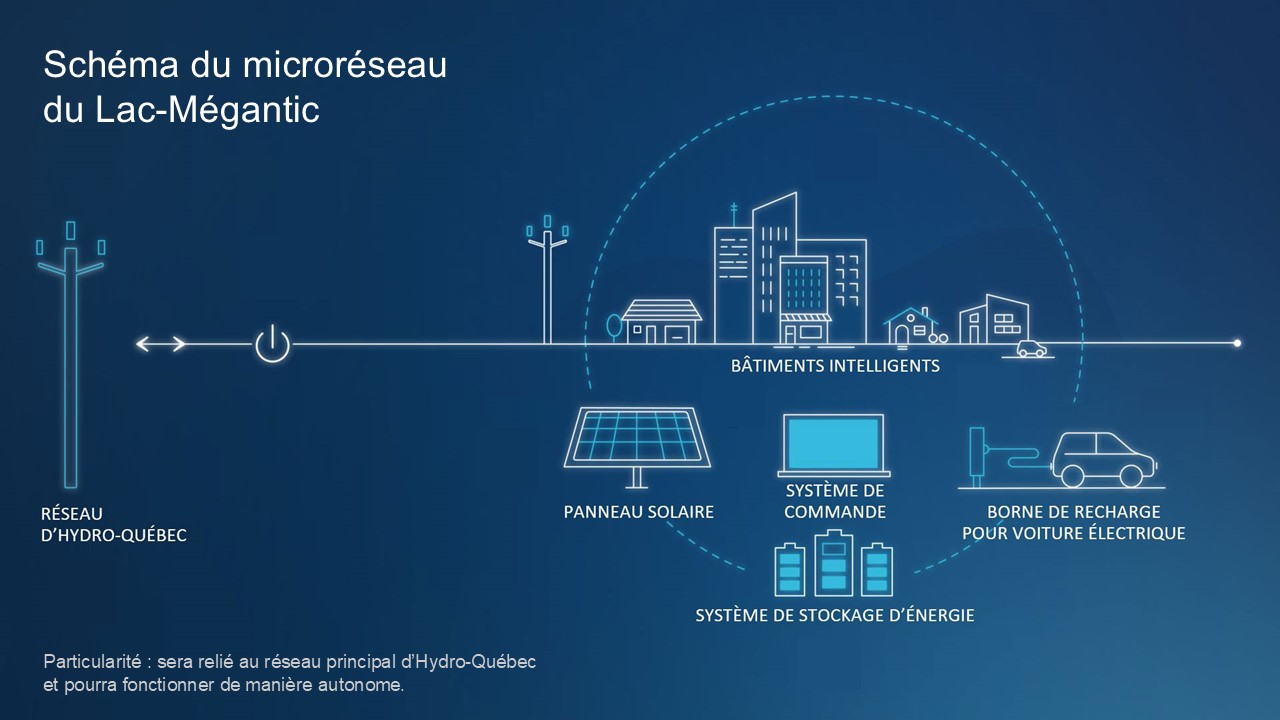
In 2021, a small-scale electric grid was built as part of the reconstruction of downtown Lac-Mégantic (Figure 1). It includes solar panels that generate electricity, as well as storage and distribution devices.
It allows electricity to be produced and distributed locally based on demand. Although it is connected to the Hydro-Québec grid, this microgrid can operate independently, promoting local resilience.
Source: Hydro-Québec. (2022). Microréseau de Lac-Mégantic.
Research project | Adaptation Case Studies in the Energy Sector: Overcoming Barriers to Adaptation
These documented case studies will help to disseminate and transfer information, mobilize decision-makers and better target barriers to adaptation in the energy sector in order to overcome them.
Research Project | Tracking Adaptation Progress in the Canadian Electricity Sector
This project will contribute to advancing methods for monitoring and evaluating adaptation in critical infrastructure sectors in Canada, with a primary focus on the electricity sector. Monitoring and evaluation provide an essential framework for selecting adaptation measures, assessing their effectiveness and associated impacts, and integrating the resulting learnings so as to support the continuous improvement of organizations’ adaptive capacity.
Webinar | Energy Sector Resilience to Climate Change
Webinar | Tracking Adaptation Progress in the Canadian Electricity Sector

Last update of the page : december 2025.
