International Network of Boundary Organizations on Adaptation
Why a network?
Given the need to accelerate climate change adaptation, boundary organizations have great potential to contribute to this effort.
To date limited interactions, low visibility, and varying terminology have hindered collaboration and lesson-sharing among them.
A network that creates a shared learning space, connects organizations from different regions, builds capacity and fosters collaboration can :
Help individual organizations have greater impact
Support the emergence of new boundary organizations
Ultimately increase the collective contribution of boundary organizations to adaptation.
- A difficult concept to define : The variety of terms used to describe these boundary spanning organizations can hinder the sharing of experiences and collaboration.
- Undervaluation and low visibility of coordination relationship-building work : Boundary organizations engage in knowledge brokering activities to make the necessary connections between those producing science and those using it. Much of this work happens behind the scenes and can be described as “invisible,” with outcomes that are often intangible (Cvitanovic et al., 2025). This lack of visibility can contribute to the underfunding of this type of work.
- Interactions are limited : To date, peer-to-peer exchanges amongst these organizations have been limited. Boundary organizations tend to be more regionally focused, do not necessarily participate in international conferences and produce fewer publications. As a result, there have been fewer opportunities to share lessons learned and experiences, which can lead to duplication of efforts and missed chances to apply successful approaches more widely.
" Research shows that sufficient evidence exists to apply the boundary organization model more broadly. ” — Kirchhoff, 2025
Challenges
There is an adaptation implementation gap.
New approaches are needed in the context of overall fatigue with the regular project-based approach for adaptation.
Boundary spanning work is not well understood or visible
Boundary organizations have not had many opportunities to connect and learn from each other.
The solution proposed by INBOA
Establishing a network of boundary organizations to create a shared learning space, connect organizations from different regions, help build capacity and foster collaborations.
Expected impacts
Learning is shared and challenges are discussed collectively.
Individual organizations have a greater impact.
Boundary work is better recognized, better understood, and more effectively implemented.
New boundary organizations can emerge.
The collective contribution of boundary organizations to adaptation increases.
Ultimately, climate change adaptation is accelerated.
Our members













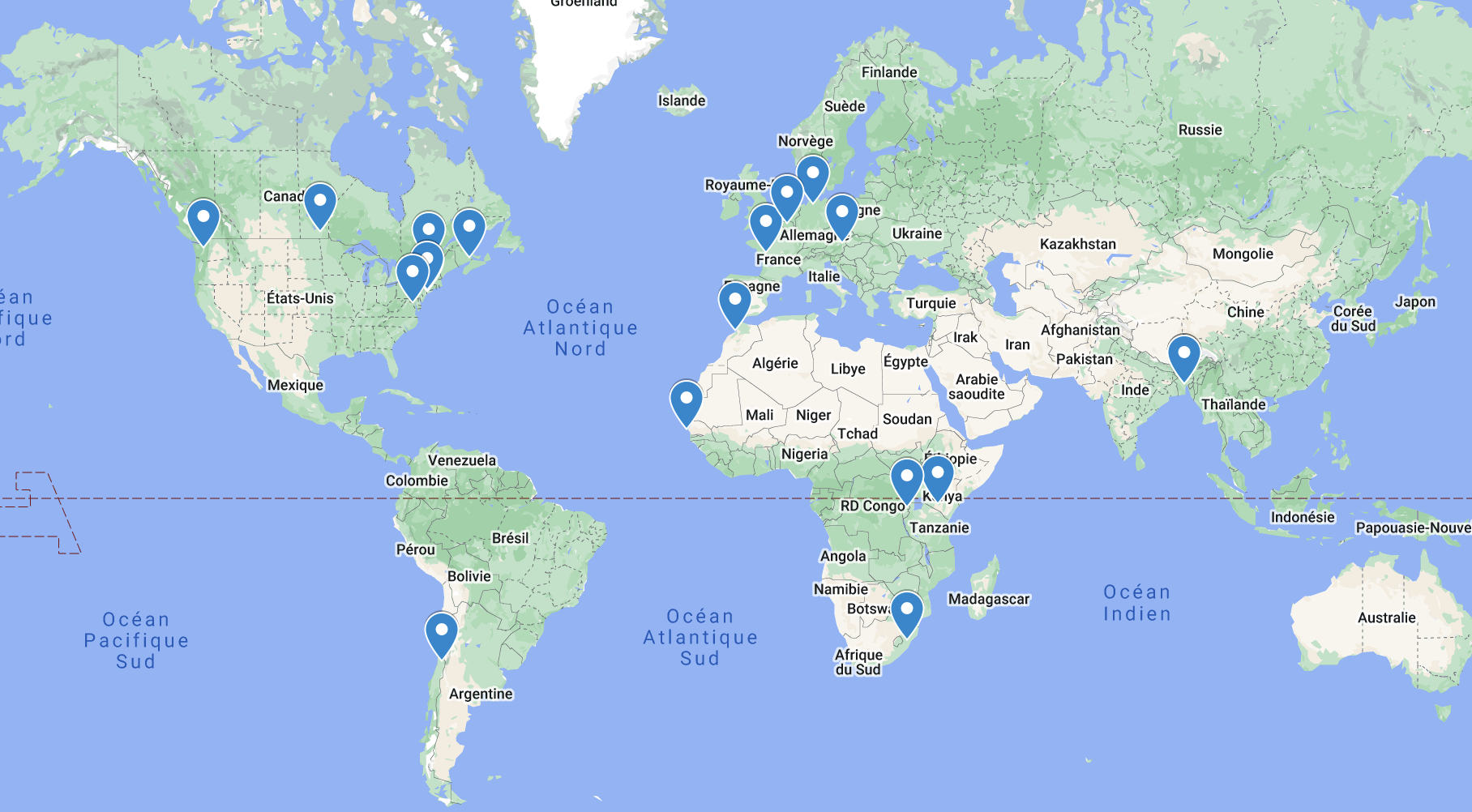
A map of our members